
Charging electric vehicles when electricity prices are particularly low? With dynamic tariffs, companies can specifically control the charging times of their vehicles and align them with fluctuating exchange prices – thus saving around 25-30 percent in costs compared to a fixed electricity price (in 2024, the industrial electricity price averaged 16.77 cents per kilowatt hour). This is because prices on the electricity exchange fluctuate every 15 minutes, depending on current demand and how much renewable energy from wind and solar is fed into the grid.
Dynamic tariff optimization automatically takes advantage of price fluctuations on the European electricity exchange, EPEX Spot. A charging and energy management system such as ChargePilot® plans charging processes so that vehicles are preferably charged during low-cost time slots – without compromising vehicle availability.
How e-fleets benefit from dynamic tariff optimization
Logistics companies
Let's imagine that transporters and commercial vehicles return to the depot at the end of their shift. There, they are plugged into the charging station at around 6 p.m. to charge overnight – but the charging process only starts at around 10 p.m., when the demand for electricity in the grid and thus the prices drop. Dynamic tariff optimization can therefore save logistics companies considerable operating costs. At the same time, the optimization takes into account the vehicle's departure times and current state of charge (SOC) and selects the time intervals with the lowest prices so that the vehicle is ready for use again at the required time. This means that optimization is carried out in such a way that the required charge for the route is guaranteed, even if this means that the absolute cheapest times are not always used. This is because operational reliability and mobility take priority over cheap charging.
Company fleets
An employee drives an electric car and can charge it on company premises. Let's say he arrives at the office at around 8 a.m. Fleet management knows that electricity prices tend to be high at that time of day and therefore wants to wait until around 10:30 a.m. to start charging. With dynamic tariff optimization and the right charging and energy management system, the employee could still plug in their car at 8 a.m.; charging would then start automatically at a time when there is either a lot of renewable energy in the grid or demand is low – or both. This means that electric vehicles can be charged as cheaply as possible without any manual effort on the part of fleet management.
Public transport companies
Transport companies with electric buses can also benefit from dynamic tariff optimization. Dynamic tariffs offer particular potential here, as buses often have long downtimes (usually overnight) and are assigned fixed schedules. The end of the route and upcoming departure times are therefore known and can be stored in the charging and energy management system. Charging processes are prioritized based on the timetables and favorable times are used without compromising operational readiness. The connexxion bus fleet at Amsterdam Airport is already successfully benefiting from dynamic tariff optimization and saving a total of approximately 30 percent in electricity costs.
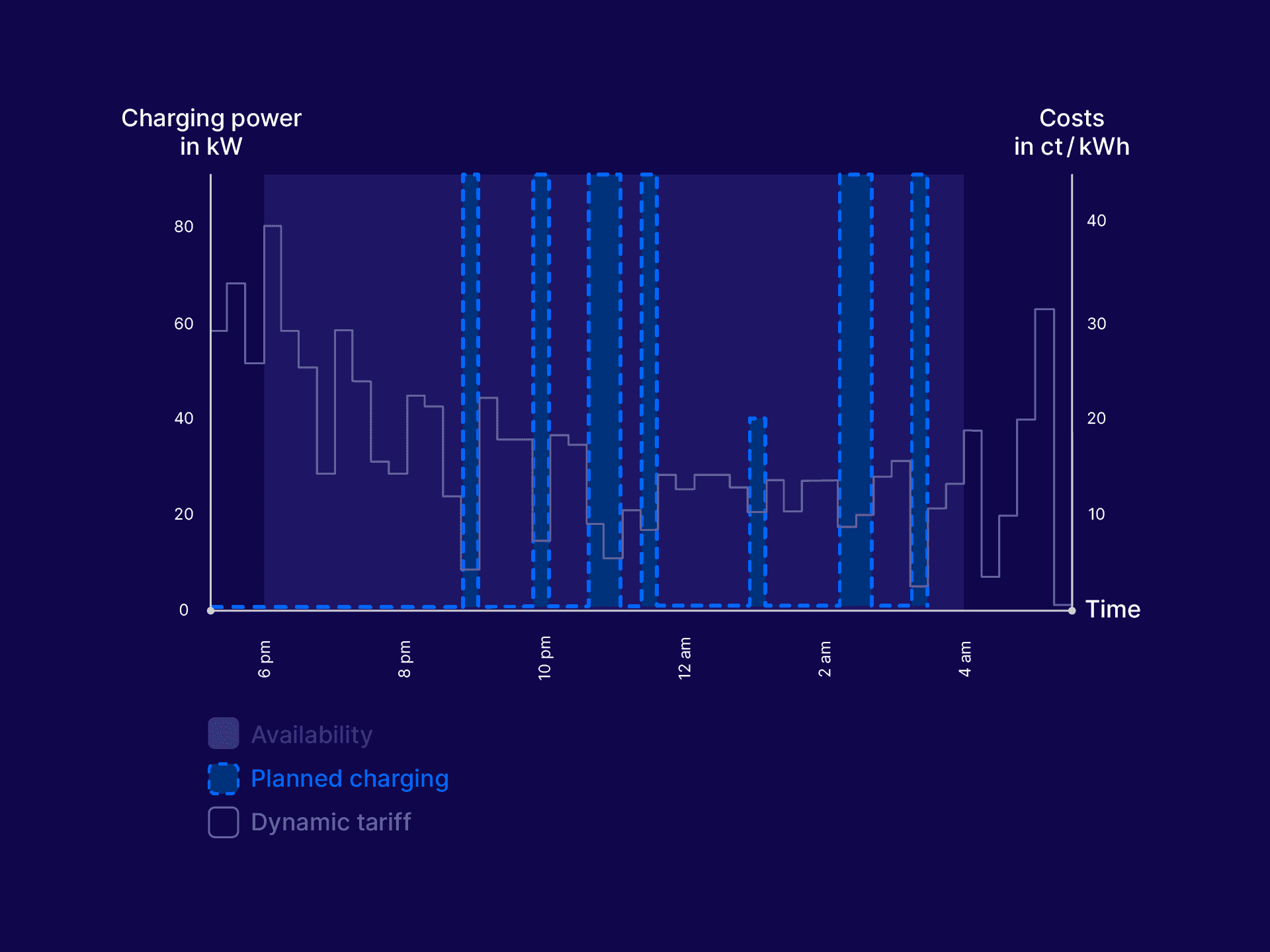
Departure times set the framework, electricity prices determine when the vehicles are charged.
5 advantages of dynamic tariff optimization for e-fleets
1. Significantly lower electricity costs than with fixed rates – without any effort
Dynamic tariffs offer the potential to reduce a fleet's charging costs by an average of 25-30 percent, depending on driving profile, charging times, and flexibility. With charging and energy management that can dynamically optimize rates, fleet operators save a lot of administrative effort – systems such as ChargePilot® automatically shift charging to times when prices are low or even fall into negative territory.
2. Greater planning reliability and transparency
Dashboards and automatic forecasts allow fleet managers to see at a glance:
- when charging will take place,
- what costs will be incurred,
- how charging behavior affects energy costs.
This not only makes charging processes cheaper, but also controllable and plannable.
3. Easy integration into existing processes
Modern charging and energy management systems can usually be implemented without major modifications. They automatically take into account:
- Timetables and routes
- Minimum state of charge
- Operational charging windows
- Grid connection capacity
Operations continue as usual—only cheaper and more sustainable.
4. Stabilizing the power grid
Flexible charging processes that are based on dynamic electricity tariffs have the potential to stabilize the power grid by drawing energy when it is in abundance. This can significantly relieve the burden on the energy system.
5. Lower CO₂ emissions through renewable energy
Low electricity prices often go hand in hand with high feed-in from wind and solar energy. Automated charging during these phases significantly improves the fleet's carbon footprint—an advantage that also counts in sustainability reports.
Conclusion: Dynamic tariff optimization is a key lever for low operating costs of electric fleets.
Companies, logistics service providers, and transport companies all benefit from dynamic tariff optimization.
The advantages:
- Lower charging costs
- Optimized charging processes
- Greater transparency
- Better environmental balance
- Future security in a volatile energy market
For fleets that regularly charge at their own location, dynamic tariff optimization is one of the most effective ways to make electric mobility economical. At the same time, dynamic tariff optimization stands for the active integration of vehicles into the energy system, because electric mobility is evolving from being a pure electricity consumer to becoming part of the solution for a stable and sustainable energy grid.
This offers companies the opportunity to significantly reduce their energy costs while also saving CO₂. Combined with the recent legislative change on bidirectional charging on November 13, 2025, the vision of V2G is gradually becoming a reality – and vehicle batteries are becoming an important building block on the road to grid stability.
Dynamic tariff optimization with ChargePilot
- Free choice of energy provider
Customers are free to choose their dynamic tariff from an energy provider.
- Reality instead of promises
Ongoing projects demonstrate that our solution works reliably in practice.
- Local, fail-safe control
Local controller ensures load management even in the event of temporary connection loss.