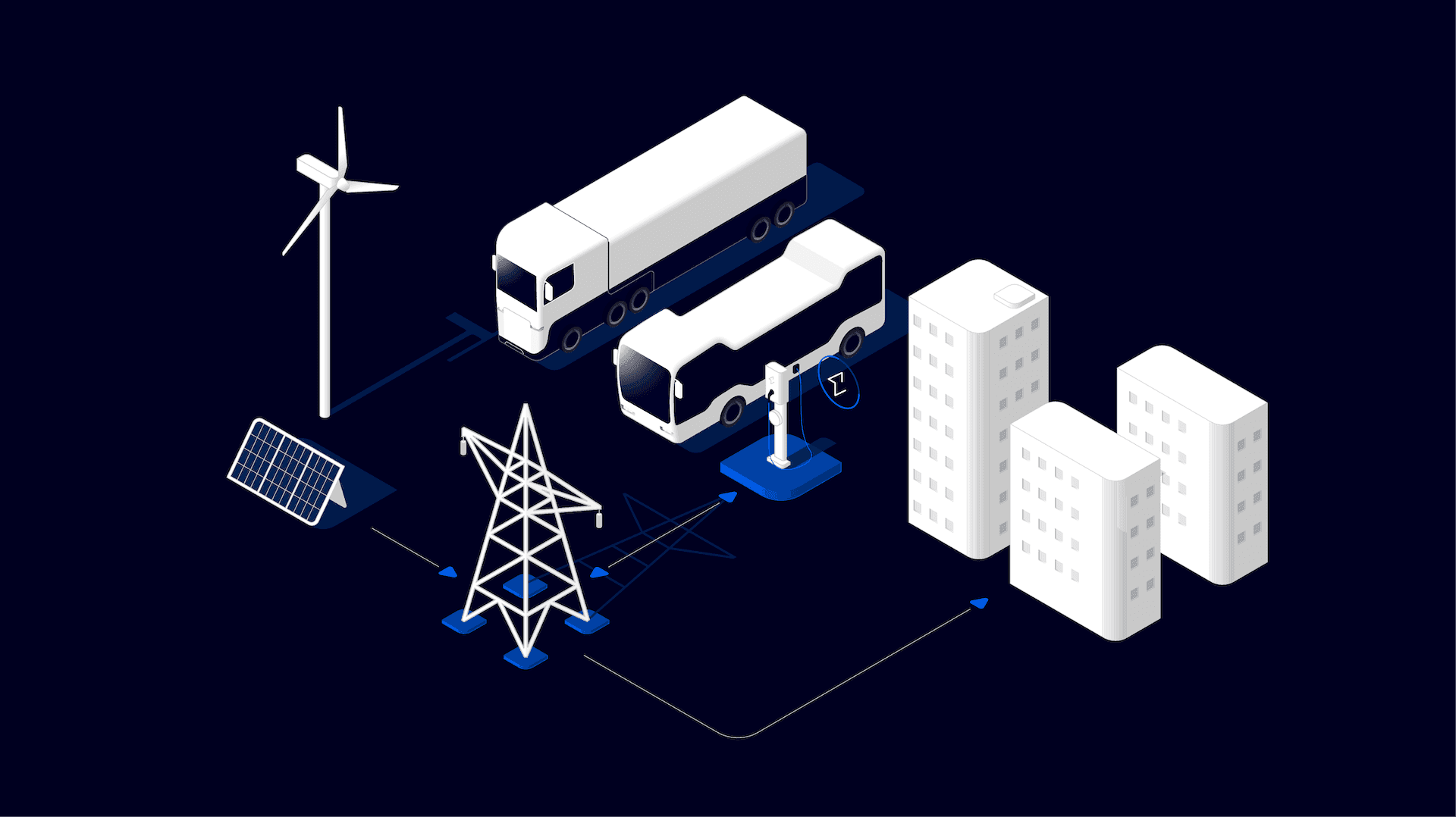
V2G provides electricity from the batteries of electric buses, trucks and cars back into the grid. When you have many V2G-connected vehicles and chargers across a service area, they can be aggregated into a virtual power plant (VPP) to contribute meaningful amounts of power, and reduce the need for fossil fuel power generation. The growing number of electric vehicles in fleets, each with a battery big enough to power a home for days, means that V2G fleets could make a meaningful impact to provide power to help meet peak demand, when electricity is most expensive to produce and consume.
So why isn’t V2G happening everywhere, all the time? Although the technology has been well-proven, it’s only beginning to be commercially available, with a few specific bidirectional vehicle and charger compatibility combinations on the market today. And, many electric utilities have frameworks and rules that make most EV rates and demand response programs mutually exclusive, limiting the usefulness to the grid and therefore the value to the owner.
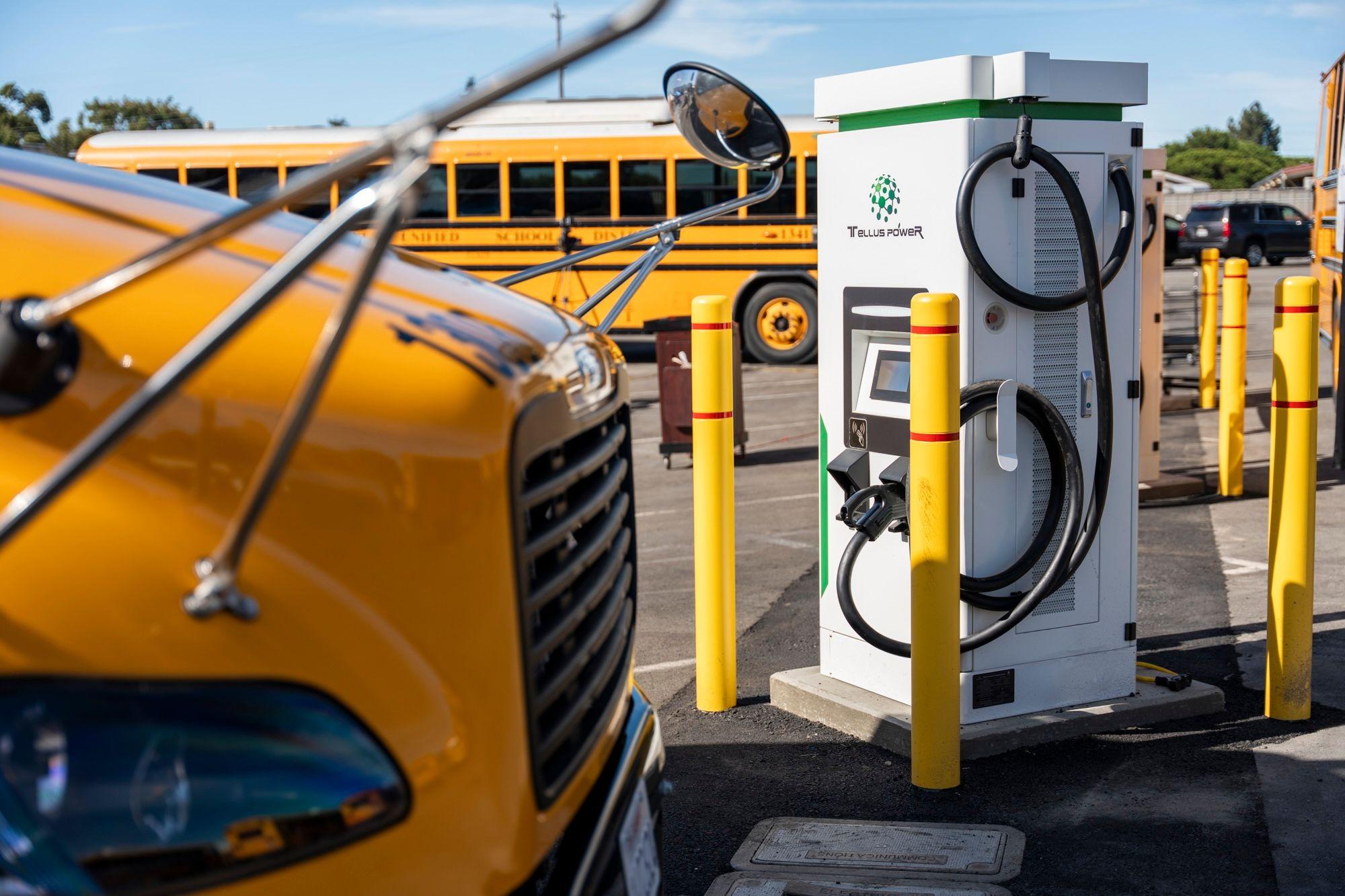
Electric utilities across North America are beginning to launch V2G pilot programs to test its potential, and California is one state at the forefront.
There are now two complementary programs in California for electric vehicle fleets with bidirectional chargers to tap for revenue from vehicle-to-grid (V2G). By enrolling in both Emergency Load Reduction Program (ELRP) and V2X Pilot with Hourly Flex Pricing (HFP) dynamic rate simultaneously, fleet operators can maximize the revenue that their idle vehicles can generate with their batteries.
Energy discharged from the buses’ batteries will now be available to support electric grid resilience
V2G Value #1: Demand Response
California’s Emergency Load Reduction Program (ELRP) recently concluded its fifth season, between May 1 and October 31. The Mobility House participated in this demand response program as a direct aggregator, enrolling fleet customers in its virtual power plant to provide access to the program, including bidirectional charging stations with electric school buses.
ELRP is a program initiated by the California Public Utilities Commission and administered by the three investor-owned utilities, Southern California Edison, San Diego Gas & Electric, and Pacific Gas & Electric (PG&E). These electric utilities offer financial incentives for participating homes and businesses to reduce their energy use during times of high grid stress and emergencies – or to export energy via V2G. Fleets can generate $2/kWh from ELRP for discharged power from their buses during designated demand response events for up to 60 hours per season.
ELRP events can be called a day ahead, or same day, up to one hour ahead. To ensure fleets capture the maximum value, The Mobility House’s charge management technology, ChargePilot enables fully automated participation in ELRP. The system receives a signal from the program that an event is scheduled, and automatically triggers V2G discharge from the electric school bus’ charger, no matter how short-notice the event is.
Traditional demand response relies on manual intervention, which is why they require day ahead notifications. The Mobility House’s automation with OpenADR enables real time demand response, whenever the notifications are issued.
V2G Value #2: V2X Pilot with Hourly Flex Pricing
For fleets in Northern California, PG&E has two Vehicle-to-Everything (V2X) pilot programs, that can help fleets get additional value from bidirectional charging. The Commercial V2X pilot offers an upfront incentive for commercial fleets that install bidirectional chargers, of up to $2,500 for 3-phase chargers less than 50kW, and up to $4,500 for 3-phase chargers 50kW or higher. There is an additional $500 available in each of those pilots for customers in Disadvantaged Communities. The V2X Pilot programs encompass multiple use cases for bidirectional charging, including vehicle-to-building (V2B) for backup power, and vehicle-to-grid (V2G) to supply power from EV batteries to the distribution grid. Participants in the V2X Pilot can stack incentives with dual enrollment in ELRP and Hourly Flex Pricing.
Hourly Flex Pricing (HFP) is a pilot rate administered by Pacific Gas & Electric (PG&E) to take advantage of hour-to-hour price fluctuations of electricity, risk-free. V2G can help fleets take optimal advantage of this dynamic rate, by charging at lowest price and discharging when they are high. Whereas V1G is limited to seeking savings from low price periods, V2G capable vehicles can also generate revenue during high price periods. Since the actual price is unique to the user, based on the divergence of their actual load from a baseline load shape, more volatility in the price signal generally means more opportunities to save money. A lucrative circuit may frequently swing from $0.05/kWh to well over $1/kWh.
"This means that a single V2G enabled school bus on the most constrained circuit could make over $20,000 in the first year of operation."
Electric fleets in California such as school buses operators can enroll in HFP and ELRP concurrently to maximize the value they are able to create with V2G. The programs complement each other well. The ELRP program is limited to 60 hours between May and October, whereas HFP creates V2G revenue opportunities year-round. HFP and ELRP both provide day-ahead guidance so that fleet operators have an idea of their next day’s charging schedule. ELRP events may also be called same day, in which case The Mobility House’s fleet charging optimization technology can automatically adapt the charge plan to take advantage of V2G demand response. If a fleet participates in both, HFP and ELRP V2G revenue will be compensated based on whichever program is more lucrative for the fleet at a given time. ELRP has a fixed rate of $2/kWh, and HFP has a fluctuating price signal for every hour of the year.
The Mobility House’s Technology is Designed to Maximize V2G Value
The Mobility House is a leading provider of charge management systems (CMS) for fleets, and also an energy company that operates a virtual power plant to use electric vehicle batteries as valuable assets for the electricity grid. The ChargePilot CMS manages fleet charging with the highest degree of reliability and interoperable charging hardware. Now, ChargePilot® also works in concert with The Mobility House's market aggregation platform to receive signals from a utility provider such as PG&E to coordinate a charging – and discharging – plan to optimize for V2G revenue while still guaranteeing charging reliability and vehicle readiness. The VGI algorithms automatically respond to the highest value opportunity across both programs, enabling fleets to maximize revenue opportunities.
The Mobility House uses this technology to be a Direct Aggregator for the ELRP program and an Automation Service Provider for the HFP rate. And, it allows our customers to participate in both of those programs simultaneously, stacking V2G value and enabling California fleet operators to power the grid with clean electricity.