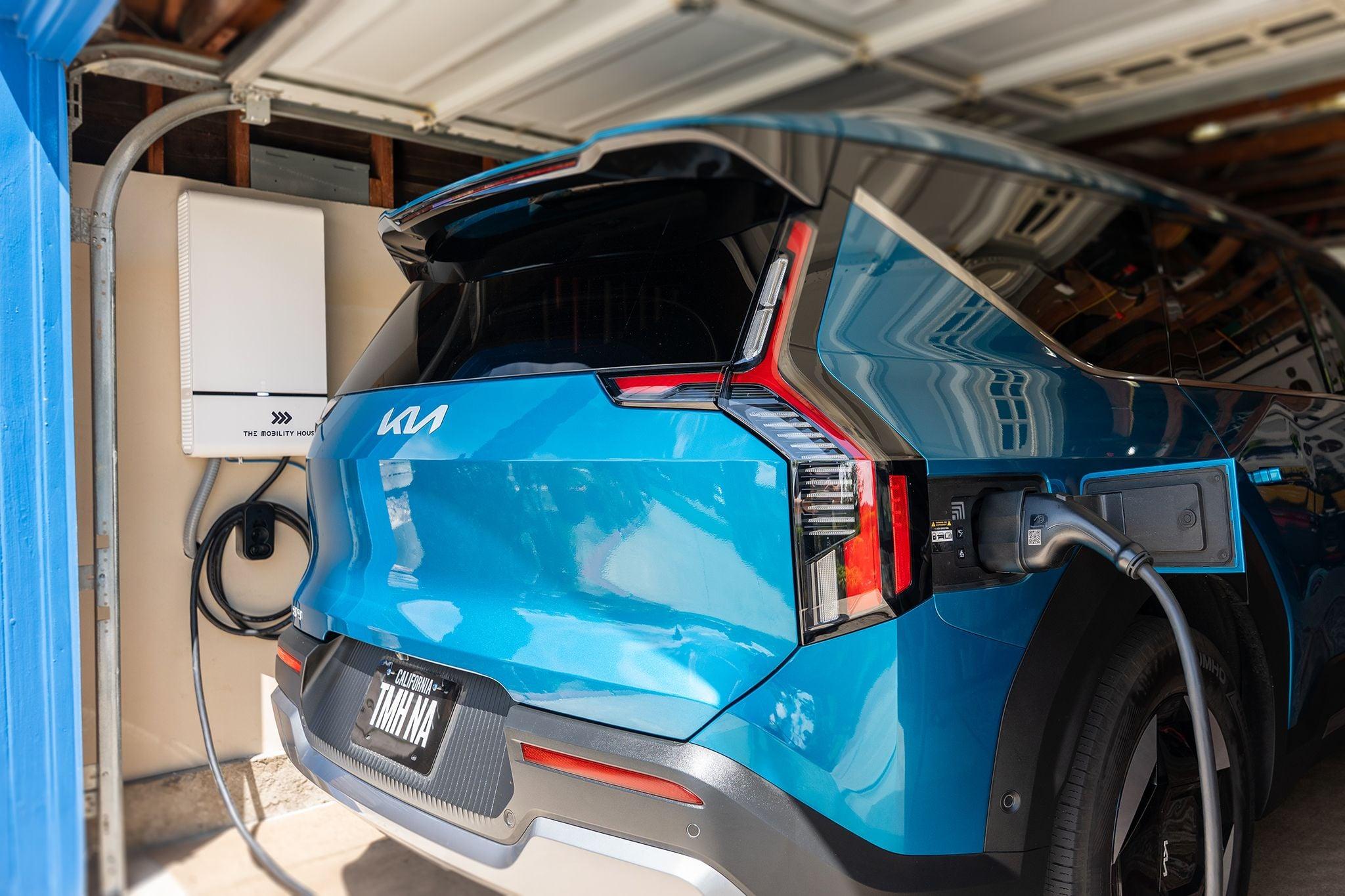
Quick answer: V2G demand response programs allow EV owners and fleet operators to export stored energy from their vehicle batteries during high-demand periods in exchange for financial compensation. Active programs exist in California, Massachusetts, and New York, with documented annual earnings from demand response alone, ranging from $500 to $1,500 per passenger vehicle, and $3,000 to $6,000 per school bus. Participation requires an interconnected V2G-capable EV and bidirectional charger, enrollment in a utility demand response program, and in some cases, a third-party aggregator to coordinate event response.
What is Vehicle-to-Grid (V2G)?
Vehicle-to-grid technology positions electric vehicle batteries as something more than transportation infrastructure; they become grid assets as distributed energy resources (DERs), just like battery energy storage systems (BESS). A typical commercial EV or electric school bus holds 80–300 kWh of energy. During the hours those vehicles sit idle, that stored energy can be discharged to support grid stability, relieve peak demand, and generate measurable revenue for fleet operators.
One type of utility program designed to facilitate this exchange is the demand response program. Understanding how these programs work, where they're available, and what V2G can earn is essential for any fleet operator or EV owner evaluating whether V2G is worth pursuing.
What Is a Demand Response Program?
Demand response (DR) is an energy flexibility tool that incentivizes electricity users (residential, commercial, or fleet) to modify their consumption or export energy in response to a signal from a utility or grid operator. Some utilities have created compensation-based programs that provide direct payments or bill credits to incentive customers to participate.
According to the International Energy Agency (IEA), demand flexibility could unlock significant grid capacity at a cost up to three times lower than building new generation facilities. With global electricity demand expected to grow more than 3.5% per year, utilities are increasingly turning to demand response as a cost-effective grid management tool.
How Does a Demand Response Event Work?
A DR event is declared when the utility or grid operator anticipates a risk that energy demand will exceed available supply. In many parts of the country, grid stress typically occurs during late afternoon and early evening hours (roughly 4:00 PM to 9:00 PM), when residential and commercial energy use both peak simultaneously - especially during summer months when air conditioning use increases. During a DR event, enrolled participants receive a signal to reduce their load or, in the case of V2G-capable assets, to actively export stored energy to the grid or to offset other onsite loads. Events can be called day-ahead or, increasingly, on the same day with as little as one hour's notice.
Active versus automated demand response:
- Active DR requires participants to manually respond to event signals, reducing equipment usage or dispatching fleet vehicles to discharge.
- Automated DR (ADR), also called passive demand response, uses connected devices, including smart EV chargers or thermostats, to respond to utility signals automatically, without any manual intervention.
Automated demand response is particularly valuable for V2G, where timely response directly determines compensation. Charge management systems (CMS) with technology that supports open protocols for demand response such as ChargePilot® and our Cascade EV Aggregator, can receive utility signals and automatically trigger V2G discharge, even during same-day, short-notice events. This removes the reliance on manual participation that limits traditional demand response programs.
Where Are Demand Response Programs Available for V2G?
Demand response has been available for commercial buildings and thermostats for a long time, but V2G demand response is very new and not yet universal. Program availability depends on your utility, your state's regulatory framework, and whether your fleet or vehicle has been approved for interconnection. As of 2025–2026, the highest-value DR programs for V2G are concentrated in the West Coast and Northeast.
California: ELRP
California is the most developed market for V2G demand response in the United States, with active programs across the three major investor-owned utilities: Pacific Gas & Electric (PG&E), Southern California Edison (SCE), and San Diego Gas & Electric (SDG&E).
Emergency Load Reduction Program (ELRP)
The ELRP is administered by the California Public Utilities Commission (CPUC) and runs from May 1 through October 31 each year. When the California Independent System Operator (CAISO) declares an Energy Emergency Alert, enrolled fleets can discharge stored energy at a rate of $2/kWh for up to 60 hours per season.
Events may be called the day ahead or same-day, up to one hour in advance. The Mobility House operates as a direct aggregator for ELRP across all three California IOUs, using ChargePilot to automate dispatch, ensuring fleets capture the full value of each event regardless of notice window.
The Mobility House has secured interconnection agreements with PG&E for several bidirectional electric school bus sites, including the Fremont Unified School District, and is expanding to additional Bay Area school districts through the California Energy Commission-funded Replicable V2X Deployment for Schools (RVXDS) project.
Massachusetts: ConnectedSolutions
Massachusetts' ConnectedSolutions demand response program currently offers some of the highest compensation rates for energy export in the United States. The program is available to customers of Eversource, National Grid, Unitil, and participating in municipal light and power companies.
For residential accounts, ConnectedSolutions compensates participants up to $275 per average kW hour for discharging stored energy during peak grid events that occur primarily during summer months.
For commercial accounts, ConnectedSolutions pays an incentive of $200 per kW of average curtailed load during the summer – and qualifies V2G-capable EVs and bidirectional chargers alongside stationary battery storage systems.
Under this rate structure, a fleet that averages a 100 kW discharge across scheduled demand response events could generate $20,000 in revenue over a single summer season.
The Mobility House's
MassCEC V2X Demonstration Program, which is deploying more than 1 MW of capacity installing bidirectional
charging systems across residential, commercial fleet, and school district
sites throughout Massachusetts.
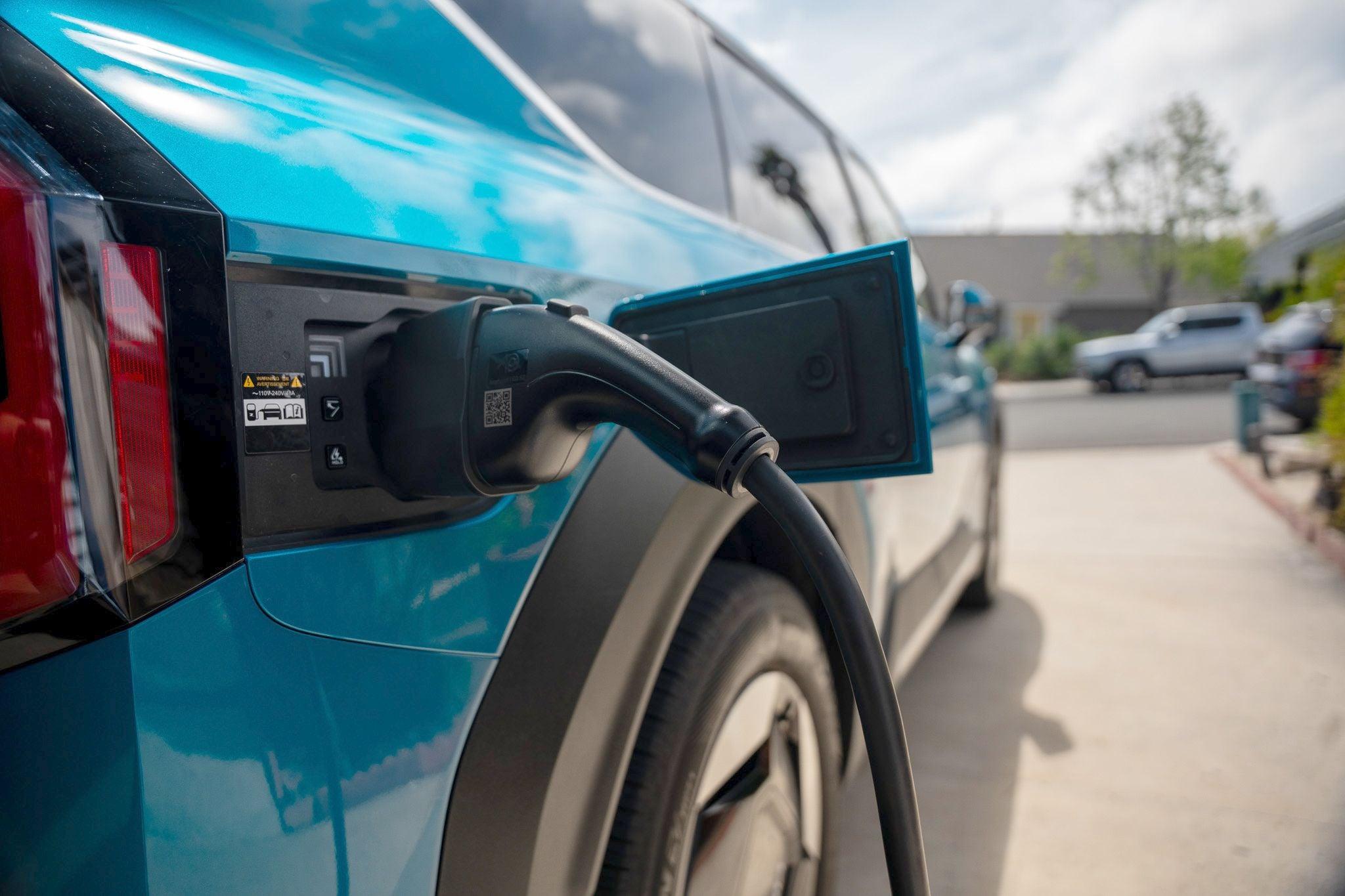
Sunrun, EnergyHub, and The Mobility House to Test Massachusetts Residential Vehicle-to-Grid Program for Eversource and National Grid Customers
Program is designed to enable EV drivers in Massachusetts to earn incentives while supporting grid reliability and affordability.
New York: CSRP Program
Con Edison’s Commercial System Relief Program (CSRP) functions as a demand response initiative designed to enhance grid reliability during periods of peak system load. Under this program, commercial and industrial participants receive financial compensation for reducing their electricity consumption or exporting power back to the grid during designated events.
Events are triggered by forecasted peak demand or specific temperature variables and are generally applied system-wide, with each utility network assigned a distinct call window.
The compensation framework consists of both reservation and performance-based payments. Participants located in Brooklyn, the Bronx, Manhattan, and Queens receive reservation payments of $18 per kilowatt (kW) per month, while those in Staten Island and Westchester receive $6 per kW per month. Additionally, all participants earn performance payments of $1 per kilowatt-hour (kWh) for energy reduction or export delivered during active demand response events.
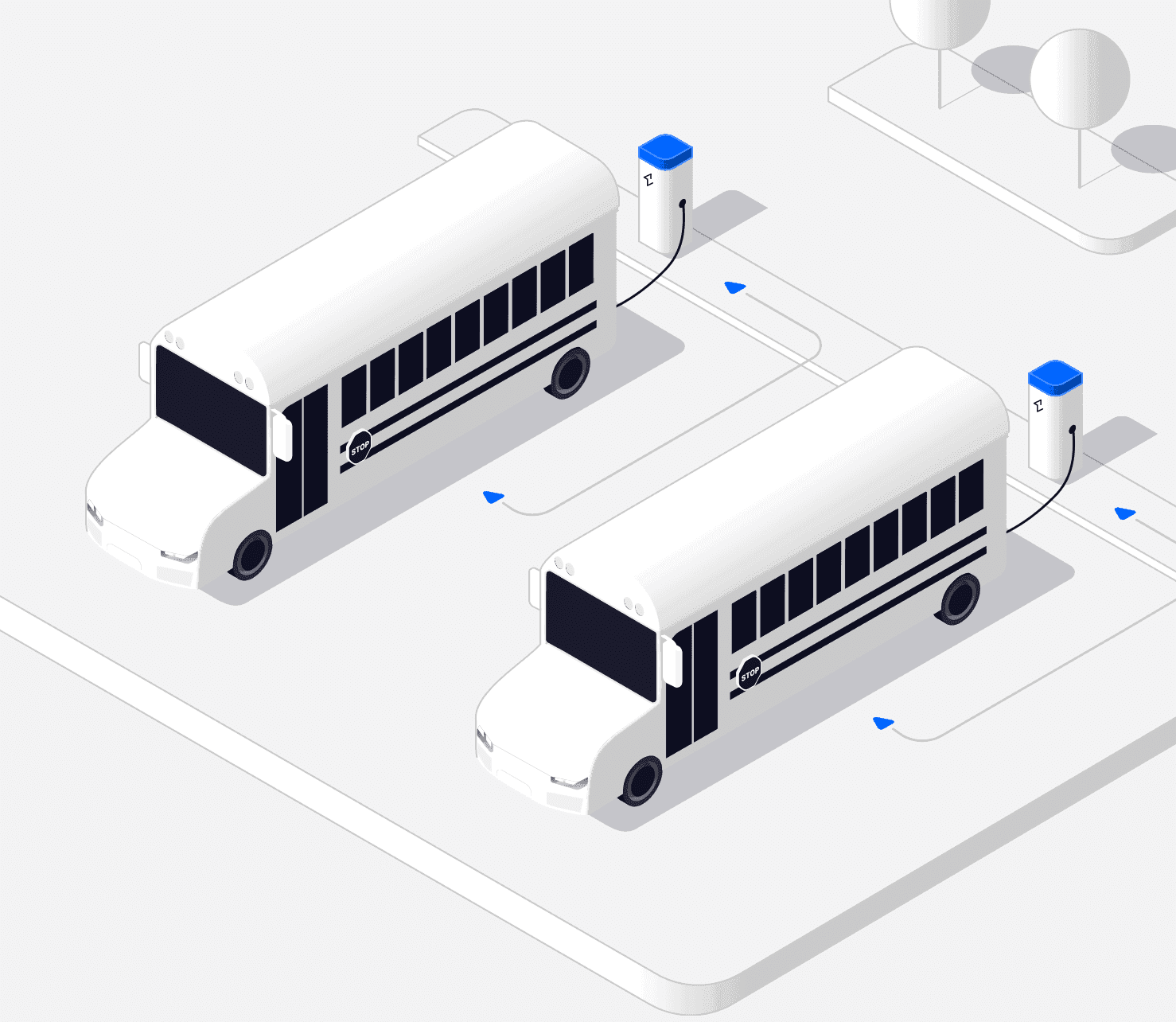
Bidirectional Charger Guide for Electric School Buses
Deploy Your Bus Batteries As Valuable Energy Assets
How Does Demand Response Enable and Support V2G?
Demand response programs are the primary mechanism through which V2G export is compensated in the United States today. Without a utility program that establishes a rate or incentive for exported energy, the economics of bidirectional charging are difficult to justify. DR programs solve that problem by creating defined, measurable revenue streams tied to grid services.
The critical enabler across all three mechanisms is automation. Traditional demand response required day-ahead notifications precisely because manual participation couldn't accommodate shorter timelines. Automated DR, enabled by platforms like ChargePilot and Cascade using OpenADR protocols, removes that constraint: fleets can respond to same-day events without staff intervention, and the charge management system continues to prioritize fleet readiness above all else.
As Sarah Woogen, VP of Product and Delivery at The Mobility House, explained at the Fremont Unified School District project: "Our market aggregation platform [Cascade] takes into account the demand response signal, the electricity prices that the district pays, and the need to meet routes, and based on all of that data, provides a scheduled charging plan. But the first priority is always making sure it meets the needs of the routes."
How Much Can You Earn from V2G Demand Response?
Earnings depend on your utility, program structure, vehicle type, the size of your fleet, and how consistently you can make assets available during demand response windows. The table below summarizes documented compensation from active programs:
|
Program |
Location |
Reported Earnings |
|
Emergency Load Reduction Program (ELRP) |
California |
$2/kWh during events (up to 60 hours/season) |
ConnectedSolutions |
Massachusetts |
$200 (commercial) to $275 (residential)/kW year (as high as ~$3,000/year per EV) |
Most participants in active programs (absent the high-value California arbitrage scenarios) report annual earnings in the range of $500 to $3,000 per vehicle. That figure becomes more significant when scaled across a fleet of 10, 20, or 50 buses.
Meet with the The Mobility House VGI team to learn how your fleet can be compensated
Getting Started with V2G Demand Response
Before purchasing bidirectional chargers or applying to utility programs, fleet operators should work through three foundational steps:
- Confirm vehicle compatibility. V2G requires a vehicle with hardware and software designed to support bidirectional power flow. As of June 2026, compatible vehicles include Thomas Built, BYD, Blue Bird, and IC Bus electric school buses, the Ford F-150 Lightning, Nissan Leaf (2013+), Volvo XC90, Polestar 3, GM vehicles, Tesla Cybertruck, and the Kia EV9, to name a few. Not every EV supports bidirectional charging—verify compatibility with the manufacturer before proceeding.
- Assess local program availability. Utility programs vary by territory. The Mobility House offers Vehicle Grid Integration (VGI) assessment services that model potential revenues based on your fleet's location and composition. If no export program is currently available in your area, smart charging with a CMS like ChargePilot can still reduce operating costs through demand charge management and TOU optimization and positions your fleet to participate in V2G as programs expand.
- Understand the interconnection process. Connecting a V2G system to the grid requires utility approval. Interconnection timelines and requirements vary by utility and state. Working with an experienced aggregator and installer simplifies this process. The Mobility House utilizes its internal application engineering capabilities to advise and support complex interconnection projects; currently supporting various initiatives in California, Colorado, New York, Massachusetts, and Michigan. The Mobility House has active V2G interconnection agreements and applications with PG&E, Con Edison, Eversource, National Grid, Unitil, other utilities, and multiple EPCs.
What to Do Before the Next Demand Response Season
V2G demand response is no longer a theoretical concept. Active programs are running today in California, Massachusetts, and New York, generating documented revenue for fleet operators and individuals who have invested in compatible vehicles, bidirectional chargers, and aggregation software.
The regulatory landscape is also expanding. New markets are developing in Colorado, Maryland, and Virginia. Wholesale market revisions anticipated in 2028–2030 could further open access for aggregated distributed V2G resources.
The most effective way to evaluate your opportunity is to start with a site assessment. The Mobility House offers Vehicle Grid Integration assessment services that model the revenue potential for your specific fleet, utility territory, and program availability. For fleets not yet ready for V2G export, managed unidirectional charging with ChargePilot builds the foundation, reducing energy costs now while positioning your fleet to participate fully in V2G programs as they become available.